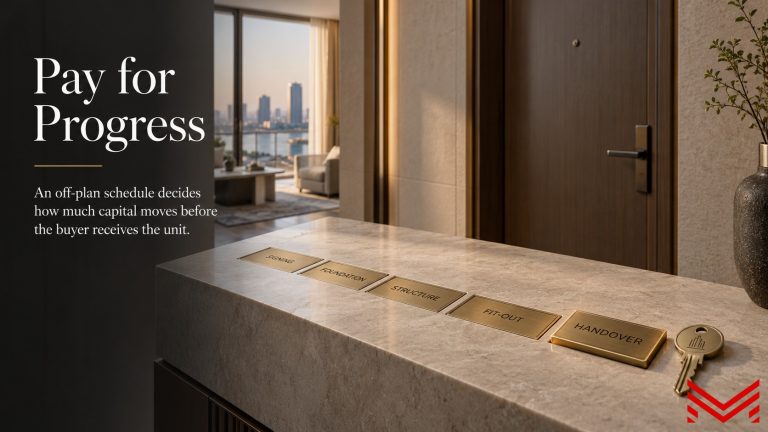

Every off-plan unit sold in Phnom Penh begins as a promise. It starts with a brochure, a render, a floor plate, and a payment schedule. The off-plan build that will eventually house the investment must travel through seven distinct stages to become real. Each of these stages carries its own risks.
Most buyers see only two stages: the launch event and the handover. The five stages in between are where deals quietly deteriorate.
The Paperwork Phase
The first three stages occur before any construction begins. The land must be acquired with a clean title. The developer must secure construction permits, zoning approvals, and, in many cases, environmental clearances. The architectural and structural design must be finalized, costed, and approved.
Title Issues
What can go wrong at stage one is the title. Cambodia operates on a dual system of soft title and hard title. A surprising number of land parcels sold for development remain in the soft-title category when construction begins. The developer may be working to upgrade the title in parallel, but this process is neither quick nor guaranteed. A project on unresolved land carries a permanent overhang that rarely appears in marketing material.
Timing Delays
Stage two often fails due to timing. Permits in Cambodia are obtainable, but they do not move on the developer's schedule. Construction cannot legally begin without them. The date on the sales contract is often set before the permit is in hand. Delays of two to three months at this stage are routine and rarely appear in buyer updates.
Design Feasibility
Stage three fails through optimism. Design feasibility is where a project reveals whether its numbers actually work. Ceiling heights may get compressed. Amenity floors may get reassigned. Unit counts may quietly increase to rescue the pro forma. By the time the launch materials are printed, the building the buyer is looking at may already be a different building than the one that will be built.
The Launch and the Deposit
Stage four is the public part. The launch event, the showroom, the rendered walk-through, and the payment plan. This is the only stage most buyers interact with directly, and it is structurally the most dangerous.
Developer Risks
The risk at stage four is not the project itself but the developer. Pre-sales deposits fund the next stage of construction. A developer without sufficient capital reserves depends on those deposits to fund the foundation. A slow launch can stall the entire build before it begins. Buyers rarely ask what percentage of units have been pre-sold at the point of their own deposit, and developers rarely volunteer this information.
The due diligence question that matters at stage four is not about the unit. It is about the balance sheet behind it.
Breaking Ground
Stage five is the first visible stage. Piling, excavation, and foundation work begin. The site fence goes up, equipment arrives, and progress photos start appearing on social channels.
Geology and Cash Flow
What can go wrong here is geology and cash flow. Soil conditions in parts of Phnom Penh may require deeper piling than originally designed, which can add months and significant costs. If the developer has not priced this buffer into the budget, the project enters stage six already behind. Foundation-stage delays of four to six months are common and are the earliest reliable warning sign that a build is in trouble.
The Long Middle
Stage six is the longest. The structure rises, slabs are installed, mechanical and electrical systems are put in place, facades are fitted, and interiors are finished. A typical mid-rise condominium in Phnom Penh spends eighteen to thirty months in this stage.
Multiple Failure Modes
The failure modes here multiply. Contractor disputes can halt work for weeks. Material cost inflation can squeeze margins. Specification substitutions may appear quietly on finished floors. The elevator originally specified might get replaced with a lower-tier brand. The marble could become porcelain. The imported sanitaryware might be replaced with regional options. Each substitution is individually small, but together they erode the value the buyer agreed to.
The buyer's leverage at stage six is limited. The deposit is already paid, the contract is signed, and the building is half-built. This is why the work done at stage four, before the deposit, is crucial for protecting the investment.
The Handover That Never Quite Lands on Time
Stage seven is handover. Final inspections, completion certificates, title transfers, and key collections occur here. On paper, it is the easiest stage. In practice, it is where projects expose what was deferred during the long middle.
Snag Lists and Delays
Snag lists at handover are normal. However, snag lists that take six months to clear are not. Strata title, which converts the individual unit into a separately titled asset, can lag handover by a year or more in Cambodia. A buyer who takes possession without hard strata title holds something closer to a long-term lease than an owned asset. This affects resale, financing, and estate planning.
This stage also tests rental-ready conditions. A unit that hands over with unfinished common areas, a non-operational gym, or a half-staffed management company does not earn the yield the pro forma promised in year one.
What the Pattern Reveals
The seven stages do not fail at equal rates. Stages one, three, four, and six are where most serious problems originate. A project that is clean at those four stages is usually clean overall. A project with soft title, compressed design, thin pre-sales, and an undercapitalized contractor is unlikely to recover at stage seven.
The investor who understands this does not buy off-plan from a brochure. They buy from a stage map. The opportunity in off-plan is not just the discount; it is the structure behind the discount.
Investors who read the stage map before the launch tend to spend less time arguing about handover dates later. The work done at this stage may not seem urgent, but it usually pays the most.
At My First Corner, this is the analysis I run before a client signs anything. The conversation is available when it is useful.